Monthly digest of reviews content created for 4ZZZ

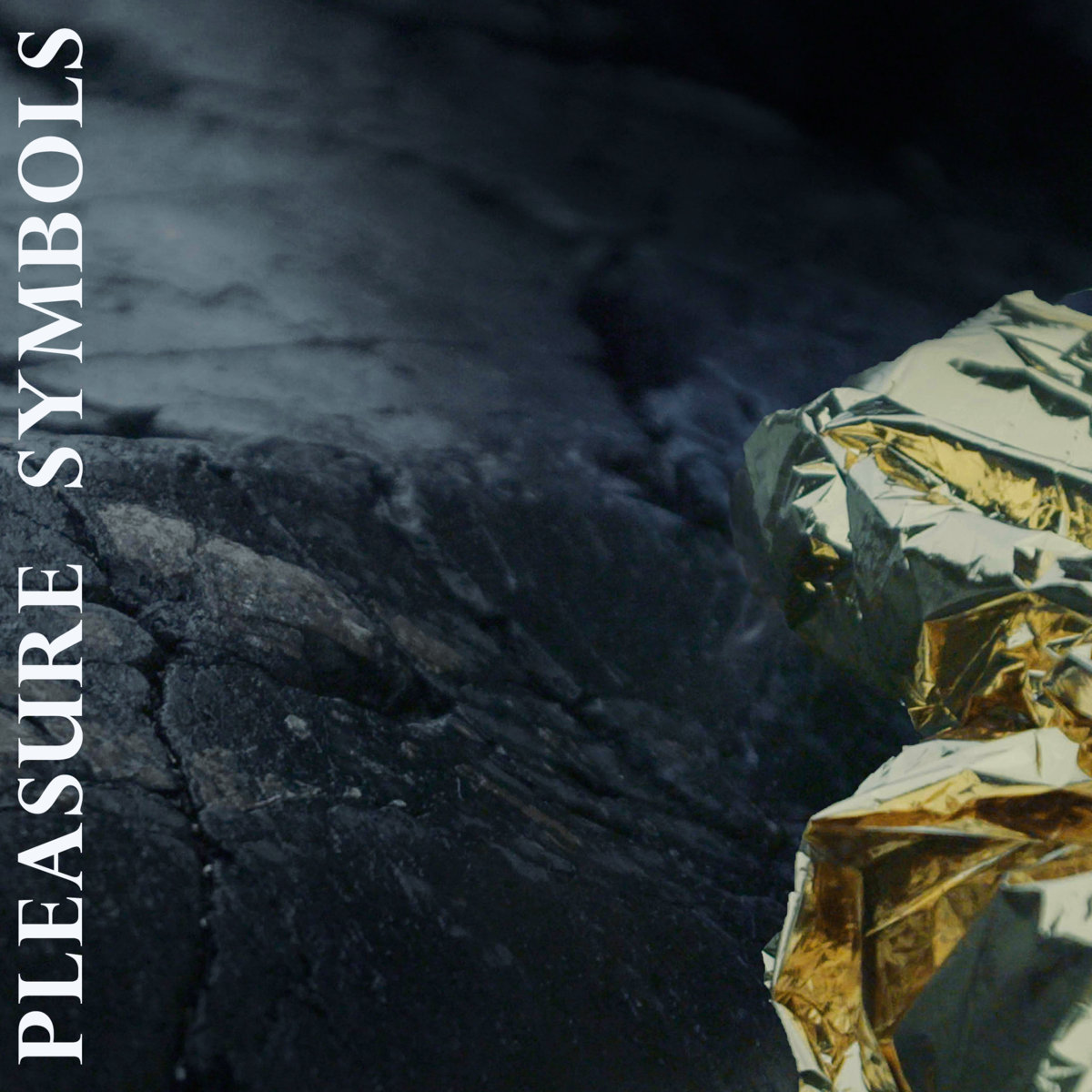
This Brisbane doom-gaze duo has been brewing in the shadows for a while now, cultivating a Californian neon sound perfect for standing around while Nicolas Winding Refn throws stones at a moonlit lake. Their debut EP is a sparsely constructed-yet-dank and almost cloying thing, mixing precisely programmed beats, wistful synth and vocals that feel like they haunt the halls an ’80s high school. For fans of the group, it’s a pity that two of the four tracks on offer have been lingering online for year or so, but overall it’s still a great, gloomy 17 minutes.
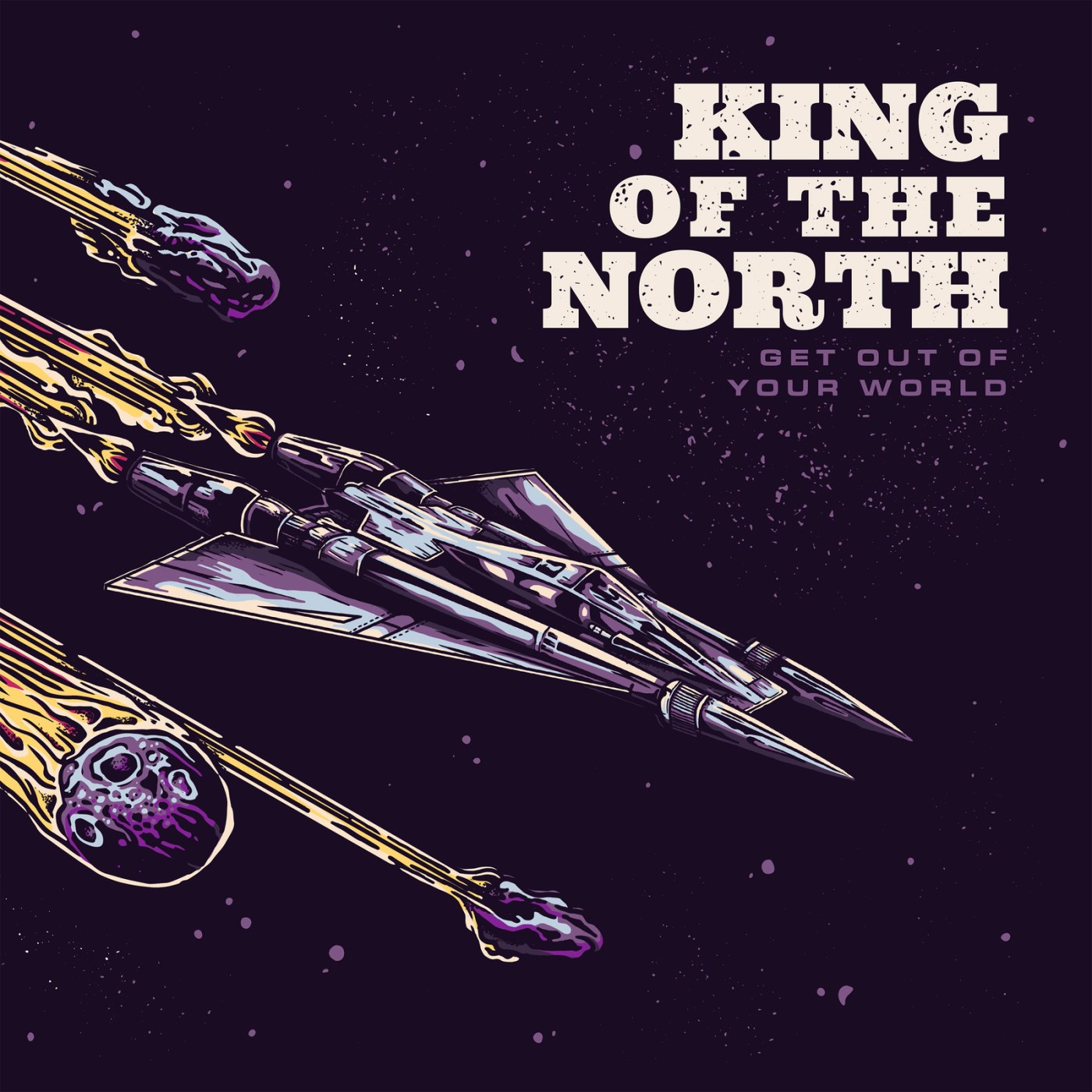
King Of The North nail the classic American rock sound, thick with guitar and formidable presence, which is impressive for an Aussie duo. There’s something a bit off-kilter old-school about it, like Bon Jovi thrashing Shihad riffs at a political rally for The Tea Party. There’s also a bit of a demanding choral theme that nags the front of the album as we’re told to, “Get out,” “Rise up,” “Light it up,” and “Ride like you’re free,” in the space of so many songs. It leans a bit towards motivational hair metal, but there’s real sincerity buried beneath it. Also, that three-from-one guitar sound is a wall worth leaning on.
After Selena it was hard to maintain my humanity. A great many of my daily processes disintegrated without their sponsor. My desire to socialise dwindled. I found my routine becoming that of a time-lapsed decomposition. I felt like a conveyor belt driving into a void, all progress lost at fulmination, a Sisyphean attitude that was probably the progenitor of my circumstance anyway, but my tread was indelible and never ceased to pursue its destination, despite contrary desires. It gets lonely still, but I hope to find comfort knowing wherever I end up, it’s me that lead me there.
Apparently it’s only terminal half the time. I haven’t told anyone yet ‘cause they’ll make it about them, they always make it about them, and then I’m gonna have to get treatments, take meds, talk to psychiatrists, and let everyone air out their platitudes, only making me stronger one day at a time until I’m too weak to tell them all to get fucked. Truth is, I’m glad I got sick. I’ve wanted something like this for the longest time, the end result if not the symptoms. I deserve what I got and I hope I don’t get better.

First, there was the lone dancer, flailing arrhythmically in the dark, his excitement sending him into walls and patrons and finally against the photographer, her eyes startled wide, yet not so large as the pupils of her assailant. The words, Whose Jizz Is This, were written in bold across his singlet, but there was no question there, and no regret on his face as he apologised and removed his hand from the photographer’s breast. Innocuous indie-lobby music wafted around the Hi-Fi’s musty tiers and did little to the silence. The first support was yet to arrive.
Then they were there, MKO and band, grafted suddenly to the stage and spliced so delicately into the ambience, it seemed as if they materialised there at a different rate for everybody. They drifted under a red gel haze for a few songs, until the spots came up to show them off. There were six of them in all and four keyboards between them. Even the drummer, looking aggressively bored, had an electronic drum pad. The backup singers used only their voices and mirrored expressions of wonderment they shared covertly in the pauses. They broke occasionally and MKO would draw them back together with something like slam recitations that grew each time into a unique synthetic amble.
After they left, the crowd thickened and paid attention only to itself. Save for the frothing ardour of the diehards clumped against the stage, the room was ambivalent. when the curtain drew back again, taking a microphone with it, Monster Zoku Onsomb stood poised with the restless restraint of a school kid on photo day and sprang into their set with the same sense of joyous release. Two female leads dressed like ziggy stardust gymnasts with abusive t-shirts, a guitar wielding luchador and twin fluro-trashmen manning laptops like strategists, somehow all coordinated. It was lurid somehow, like watching an 80s battle of the bands throw up on a wrestling match staged at a rave. The crowd eddied around the spectacle, a TISM dreams The Prodigy experience, and gawped enthusiastically. Attention made the band’s fervour bloom into an abandonment of instruments and led them climactically into almost syncopated dancing that could have been mistaken for choreography. They bowed out with a jester’s satisfaction and the room expressed its gratitude.
Outside, the lone dancer crouches in the dark, yelling abuse into the street and trying vainly to menace anyone interested. Nobody noticed, the crowd was unified in its goals, a dense mass fidgeting in the dark, its myriad voices rising like fumes of anticipation. When they were ready, there was Peaches. She stood centre stage, raised on a platform like an ikon, dressed for the time elvis was a power rangers villain. The crowd was overjoyed. Peaches sprang to life and off the platform, she pranced keenly, paced the stage and waved them on, already demanding more. The tramping took her behind a set of digital turntables that had been lurking at the back, she flipped the beat, repeated her parade and congratulated ‘Brisvegas’ on the virtue of its being. The crowd had been bought.
Her first act was not really introduction, ‘Why don’t you talk to me’ was her querulous inquiry to an opposing pair of cross-dressing dancers in scintillating leathers. It was the start of many hopeful transgressions; Adam, Eve and a fruit of temptation, together at the genesis of escalation. Peaches began her transformation right there on stage, shedding her layers about for supplicating roadies to gather and stow in swift consecration. She emerged in a leotard encased in golden handprints like an inverse midas. The dancers returned as body horror mockeries, giant felt renditions of Cronenbergian vaginas. They flapped and convulsed while Peaches brayed over intimate plastic surgery.
The intervals return her each time to the turntables, minute adjustments and the induction of the next piece. she never misses a chance to sing and dives into each lyric with deft though almost absent precision, as though the beats weren’t just programmed by machines but pre-recorded in her mind. After the vaginas were swept away, things flowed on with practiced discord, constantly morphing, spandex goat people beckon an octopus fur coat collared with mannequin hands into the tattered fabric garb of a lost tribe of haberdashers dancing where there wild things are.
Jockstraps and bondage and champagne showers, fetishes are alluded to, expressly shown and artistically interpreted. The crowd press the stage constantly and claw for her with unashamedly eager paws. She lets them have her in increments; at one time she walks above them, buoyed by a sea of gripping hands; in another, she nests inside an inflated phallus and writhes in safety, brazenly crooning for a dick in the air. Once, she flagellates a dancer in a seeming breakbeat trance who proceeds to light himself on fire, the stench of burning hair filters through the miasma of sweat and aggravated sexual tension.
Everything builds until it pointedly stops. Peaches proclaims a break to shill her merchandise on stage. Her and the dancers don matching camouflage fanny packs while the secret hands pack the stage with cartons full of shirts. ‘Only thirty dollars,’ she yells, but the sound is exit through the gift shop. One man holds a fifty in the air and watches as Peaches rub her pussy on his choice of clothing. ‘I hope you like my vagina sweat,’ she yells, gleeful even as the money disappears. After twenty awkwardly bartered minutes, she throws another song into the stunned confusion of the crowd. Playing for thanks but falling hollowly short, she finishes quickly, packs her toys into a bag and walks the lot off stage.
Looking for all the world like a pornographic ring-master, by the time she comes back bare-breasted for her encore, the crowd has waned and are already dispersing, all of them wearing individual faces of vague post-coital disappointment, their revenant spell broken viciously over the back of capitalism. Peaches was already over.

How many years has it been? Almost a decade between drinks. Eight years since their Album of the Year. It would be easy to list all the things the new Faith No More release is like; there are hints of Peeping Tom, shades of Tomahawk, a dab of Fantomas, and even a little latter days Bungle. But every example boils down to the same substance, Mike Patton. Sol Invictus is exactly the same, and yet it’s more, it’s a Patton who listens, one who shares, a star that leads by letting his band shine around him. Simmered but not reduced, it’s easily the most well behaved of all FNM albums.
That’s not to say Sol Invictus is tame, and it’s certainly not a problem of old age as there’s not a single twinge of the rheumatic apathy that hovers over some late life bands, rather, there’s a feeling of understanding that permeates the album. It seems like any problems the band had with each other in the past have since been smoothed over. The whetstone friction that honed their previous releases may be absent, but the results are just as sharp, exhibiting a craftsmanship that only comes with time and dedication.
While previewing some of the new songs at recent live shows, the band played with the same fierce passion contained in all their material, delivering their choice of singles with frenetic and immediate energy. The studio cuts of these songs, however, feel almost restrained in comparison. It’s the difference in tone between saying I hate you through clenched teeth and yelling it at someone’s face.
Though the album is missing some of that live furiosity, it draws as much of its strength from what it’s not as it does from who it is. In that way, it’s oddly reflective and even exhibits a certain level of patience, almost a controlled temper. Here, the immediacy of their live performances doesn’t actually acknowledge the heart of the album. Sol Invictus is a seething thing, measured and quietly vicious in its intent. Somehow, in its own subdued way, it articulates itself better than its screaming front man ever could.
Plenty of the tracks are still rife with rage. Superhero, Separation Anxiety, Cone of Shame, there are plenty of moments all throughout that are plenty angry in their own right. Though Faith No More have had their fair share of mellow over the years, the feeling this time is just a little bit softer overall. There doesn’t seem to be a rough edge left to rub between them. Throw some rocks in a tumbler for thirty years, though, and see what happens.
Sol Invictus is softer, yes, but only because it feels refined, white sugar not raw. Though definitely not saccharine, its easily as addictive, equally delicious and was certainly worth the wait.
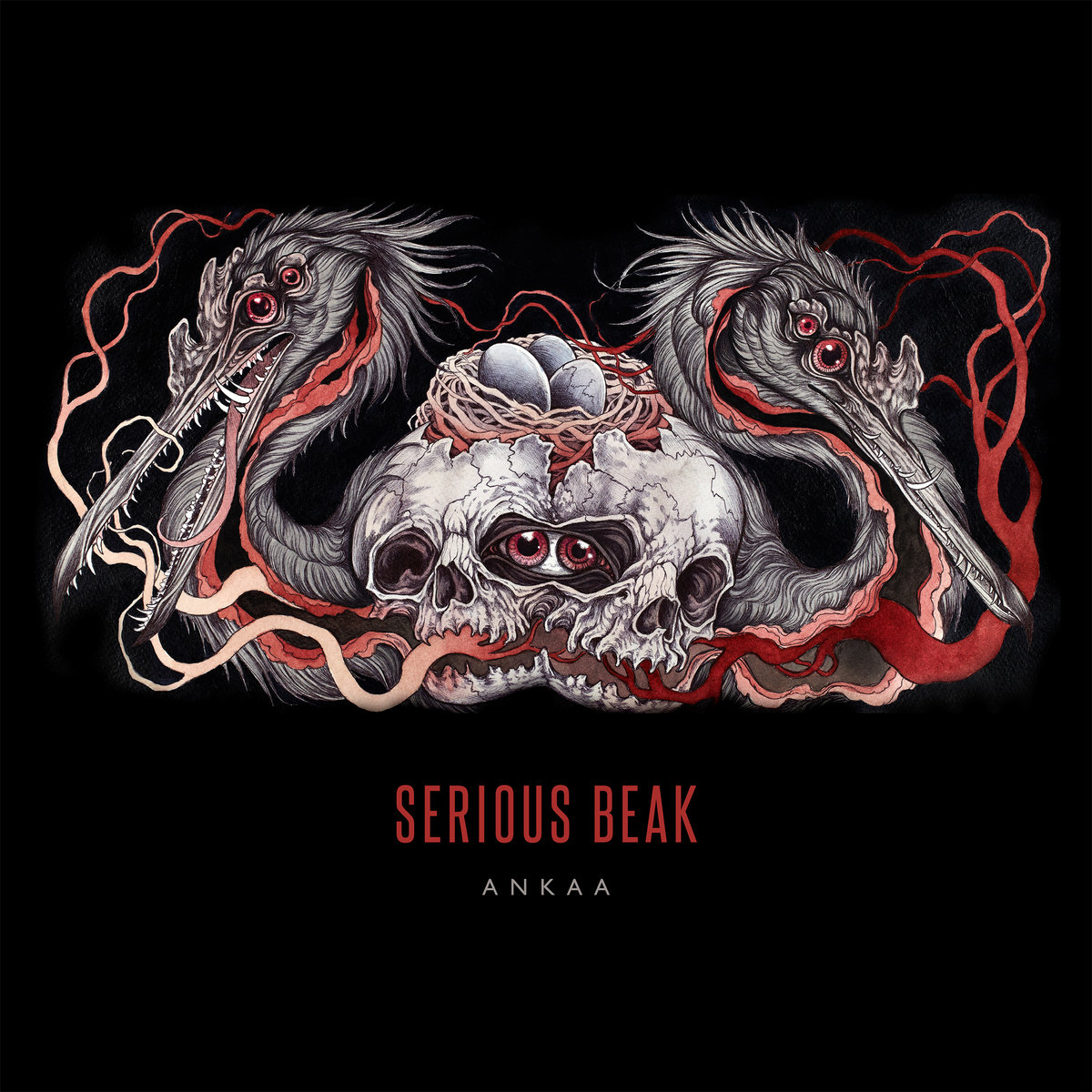
Serious Beak, the djentlemen of progressive math metal, live at the intersection of discord and rhyme. Their latest album Ankaa contains so many moments that weren’t written by other bands, it’s occasionally easy to get confused in the crush and anticipate something that’s never coming, a little Tool maybe or some Battles. It’s like a slalom run that skirts the flags of influence while carving it’s own path through the powder.
It’s going to get billed somewhere as Prog, but strangely, that might be limiting, even if there is a progressive cohesion and sensibility in the way that the tracks interlock and toy with each other’s threads. It’s also entirely possible the whole thing is a joke, with every track sub branded by an ornithological taxonomy that hints at not only each song’s inner themes, but towards the entire species of the album. This is what would happen if a zoologist wrote his thesis with metal.
That kind of concept could make a 4 track release like this into a frivolous aside, but the implementation is so precise and tarrishly invasive, it doesn’t matter. There isn’t any space for that kind of thinking, no restful moments of reflection at even the sparsest of junctures.
Proto (Menura novaehollandiae) builds a frenetic and intensely measured beginning out of a bed of static before laying it down on a crystalline refrain, one of the myriad themes the album involves itself with. Main Sequence (Dacelo novaeguineae) picks it up again and plays with its gentle beginnings before growing into an adult version of video game dungeon music and degenerating into a world where the Joker’s death scene from Burton’s Batman was reenacted by kookaburras.
Red (Laniocera hypopyrra) starts out with a feint shaped like an average rock song but it’s not long before some sharp rhythmic equations are being threaded through the reverb. It’s definitely the climax track and bears the most melodic weight of the lot. Of course, it still finds the time to take a couple of detours through that crystal valley, handling these downhill transitions with upwards velocity.
Heat Death (Teratornithidae) is the coda that ties it all together, a drifting summary illustrated in singularly drawn chords. While it’s the most downbeat of all the tracks it still contains some piercingly djentle moments and plays like a cool down for the criminally insane.
So yeah, Ankaa is a weird ride. It’s discordant prog themed around birds, an ethereal grind with razor timing, a familiar sound like nothing else, and quite possibly a pointless experiment that’s definitely worth consideration.
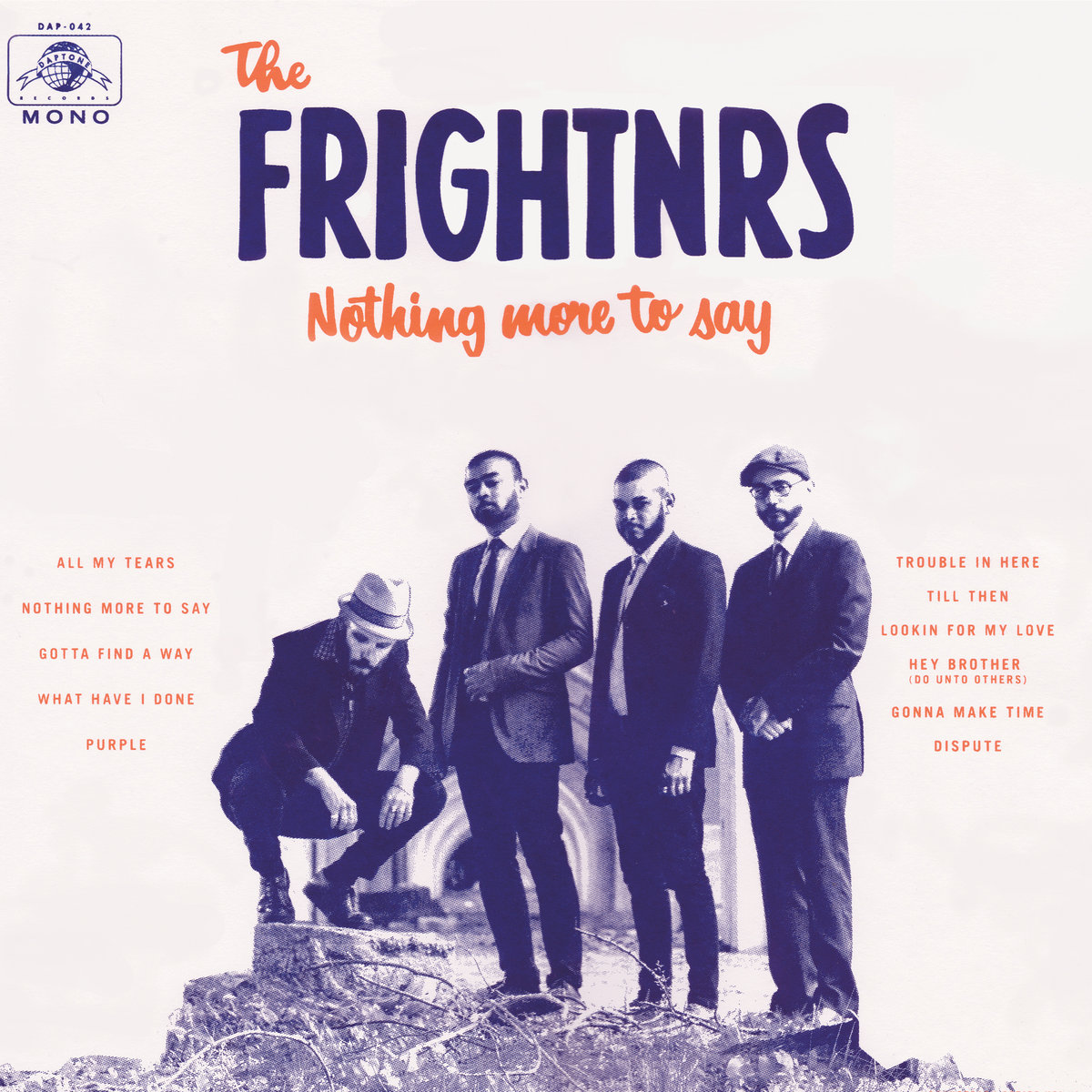
After a pair of EP’s released some years previously, The Frightnrs (who sadly hold no connection to the seminal film) have dropped their fist full studio album, Nothing More To Say, an eleven track trek into a trio of categories: irie, love, and the irie trouble with love.
This Queen’s quartet are renowned for their low-slung reggae vibes, deceptive falsetto vocality, and an avoidance of the clichés that (arguably) hallmark the genre. While the group does sidestep many of the regular trappings, like herbal etiquette for example, they seem to have taken that step into one confined direction. Sure, there are derivations here and there, a tempo change or chittering harmonica, an ambiguous duet or harmonic stack, but none of it ever really explodes. It’s almost as though the tracks had their vibe levels capped at Sunday afternoon beer garden.
In a dip dapping nod in Daptone’s direction, there are a couple of cheeky covers thrown in for good measure, Bob & Gene’s ’67 classic Gotta Find a Way and Saun and Starr’s more recent Gonna Make Time, but both are so fully indoctrinated into the irie proceedings that they feel indistinguishable from the rest. Good or bad, it’s certain to spark something in eagle-eared fans, and it definitely speaks to the organ-grinding mastery they have over the material.
The Frightnrs are clearly a tight and harmonious outfit, their dedication to a certain style of sound is admirable and on-point, almost to a fault, but this is undoubtedly a record that should be treasured by lovers of reggae, soul seekers, and anyone else that might simply enjoy a mild to moderate afternoon of decanted calypso chemistry. The rest of us can just sit back and wonder if naming a debut Nothing More To Say was a literal mistake or an allegoric accident.
I keep trying to talk to my dealer about getting my life back on track. It’s the wrong avenue, I know that, but he’s such a good guy I have trouble believing I’m part of his self interest. Still, you can’t keep giving somebody money and expect them to convince you to stop, guy’s got his own habits to attend. I furnish his like he furnishes mine and we both go around the symbiotic circle, I can’t just get off and expect the ecosystem to stay balanced. Maybe I could pay him for the truth, another service in demand.
Jenny drops some hardcover pulp on the table, making my cereal flip its milk. ‘Did you annotate my book?’ She demands. I stare at the little bits of white chaos on hardwood. ‘Did you annotate…’ I got it, I tell her, it’s just a weird word to hear out loud. ‘Well you’ve heard it twice now and missed the point both times.’ Or circumnavigated it for purposeful effect? Which is increasingly her ire. You’re about to be angry with me, huh? ‘There’s no about about it, I’m angry with you already.’ Hold on, I say, let me annotate that.

Breaking out of the fringes during the grunge revolution of the nineties, Beck came to the fore with a style full of incisive anti-folk sentiment and satirical experimentation. Raised by avant-garde parents in the aftermath of the pop-art movement, his was a voice that was sharp, clear and easily heard among the forefathers of the indie uprising.
Beck’s new album, Morning phase, was built as a companion piece to the now twelve year old Sea Change, an album that was deeply personal yet culturally irreverent in a relevant way. Unfortunately, the companionship offered by Morning Phase is largely empty, like a conversation with an old friend who just waits for their turn to talk and then has nothing to say. In fact, by anchoring it to the past so explicitly it’s easier to see how little progress has been made. It becomes a way of emulating what has gone before without having to gain anything from it.
There’s a pervasive feeling that nothing has been able to make Beck happy in the time that has gone by. Passively clingy, the voices of indie pioneers echo out of each track as if from some deep backwater canyon. The compositions are littered with limpid string arrangements, banjo and piano melodies that are pleasantly mellow, if not a little maudlin, it actually feels quite unfortunately shallow. It could simply be the direction of the thing, being a more inward facing undertaking than we’re used to receiving, but there’s a sad sense of surrender throughout the album, an aged acquiescence living inside it that feels a little selfish.
The problem is that most of it feels too intimate to be connected with. The songs seem to be written exclusively for him or for someone dear departed, a message created specifically for someone other than you and then delivered with frustratingly consistent insularity. There’s no room made for engagement and no hint that it might even be welcome.
Morning Phase might be a great love letter for it’s intended, but for everyone else there’s not even the perverse satisfaction of reading a strangers diary, just empty sentiment without calibration.

Sampa The Great is pretty darn good. Straight outta Sydney by way of Zambia, she dropped her first mixtape, The Great Mixtape, back in September and since then she’s been getting all the right kinds of attention from the boys in the biz. She deserves it too, ‘cause that thing is legitimate dope.
Her latest release, Weapon Chosen, is a direct response to Hiatus Kaiyote’s request for a remix, like they heard what she was putting down and said, do you reckon you can make us better? Well, she probably could, but instead of taking what they laid out and adding a little R’n’B wah wah, or just spitting rhymes all over it, she’s created a diacritical response that completely negates the original meaning in the best possible way.
Running over six tracks and one literal second past eleven minutes, the EP, mixtape, rework or whatever, is sort of like grappling with one side of an academic conversation, like a physics professor explaining string theory with bananas. It probably shouldn’t work, but it absolutely does, and forms a measured, intelligent retort to stimuli outside of the usual fieldwork.
Sampa’s style is something like neo-tribalism infused with the kind of 3030 future beats that dub drivers have been piloting in circles for years. Yet, she’s not beholden to any of it. That’s what’s really great here. Everything that should be pastiche or passé is positively unique and seamlessly produced. Despite the samples and the origin, the sound here is absolutely her own, and that’s even better than the fact that we get to claim her as Australian, because individuality is becoming an increasingly rarefied creature in the modern age.
If you have eleven minutes in your day, you should listen to this release. If you don’t, well then you should reprioritise some shit and still listen to it. This side of autoerotica, it’s the best use of that time you’re likely to find.
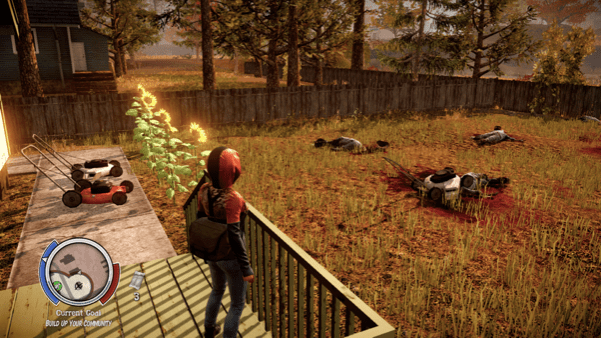
I’d long since run out of food and drink. I was bruised, beaten, and exhausted to the point of near collapse. My ute was packed with a days worth of salvage; medicine, materials, fuel, ammunition, supplies we desperately needed. The community was counting on me, but more than anything I just wanted to get home. I decided to take a shortcut. It didn’t go well.
Smoke billowed ominously from the overturned ute. I stood at a distance, shocked into stillness, and debated my options. Should I ferry the goods back to base one at a time? Could I find another vehicle nearby? Would I make it either way? Before I could decide fate did it for me, turning my efforts, ute and supplies into a giant fireball. Everything was wasted and there I was with a field full of zombies still between me and my base.
Despite the overwhelming and unexpected loss, it’s moments like these that make State of Decay special; emergence, the holy grail of the sandbox genre. At its core SOD is a pure loop of RPG feedback. It drops you straight into its world with zero exposition and asks you to fend for your life. Though it seems initially daunting, the interplay of systems open up in a very rewarding and organic way. After more than a dozen hours I was still finding new ways to scavenge, refining my tactics, expanding and relishing every killing stroke.
Whether choosing a base or crushing a skull, all of your actions feel appropriately weighty, and permadeath for characters means that a narrow focus and attachment to any single character can be swiftly punished. Even the most well equipped character can be quickly overwhelmed by an unexpected horde. Fortunately there are plenty of heroes to level up and experiment with, all with their own quirks and personality. Sadly, most of that personality is absent from the story, but the loop and grind embedded in the mechanics are so compelling that it simply doesn’t matter. I wasn’t running to an objective to further the plot, I was in it for the community, my community.
The Year One Survival Edition comes bundled with two pieces of DLC; Lifeline is a story driven endeavour, this time with a military focus and the benefit of a new city centric map; Breakdown is a pure distillation of the core SOD loop, essentially survival mode for a survival game. In addition to the added content, the new edition has purportedly seen a slew of upgrades, including “Improved lighting, textures, animations and combat mechanics… In Stunning HD,” however, calling it an HD remake is about as accurate as the panicked machine gun fire that saw one of my survivors torn literally in half.
Many of the bugs that plagued the last gen version are just as persistent as the Z virus that inhabits its world. In fact, my very first play-through saw a glitch that disabled all controls and left me helpless and completely dismembered. The glitch persisted even after spawning a new hero and forced a total system restart. It was gruelling in a way I’m sure the developers never intended. Despite this and numerous other instances of pop-in, clipping, slowdown and general jankiness, I was never truly frustrated. I would survive.
Though it may not be as shiny as some other recent rereleases which came out dripping in glorious HD, (like a certain stunning survival shooter made a misbehaving canine), the underlying mechanics, coupled expansions, and sheer compelling joy of survival more than make up for any technical shortcomings.
For anyone that has already clawed their way through all of Trumbull County’s thriving zombie community, the State of Decay: Year One Survival Edition probably won’t provide you with any fresh meat, but if you skipped either of the rewarding add-ons, or if you simply didn’t make it to the apocalypse last time around, SOD is a grippingly delicious no-brainer.

Support
Help a starving artist eat.
A$5.00


 A Few Short Words